
Strategy & workflow audit
Map the real work, select valuable use cases, define architecture, evaluation, permissions and running costs before building.
Handover: Workflow map, prioritised use cases and a scoped specification.
Discuss this capability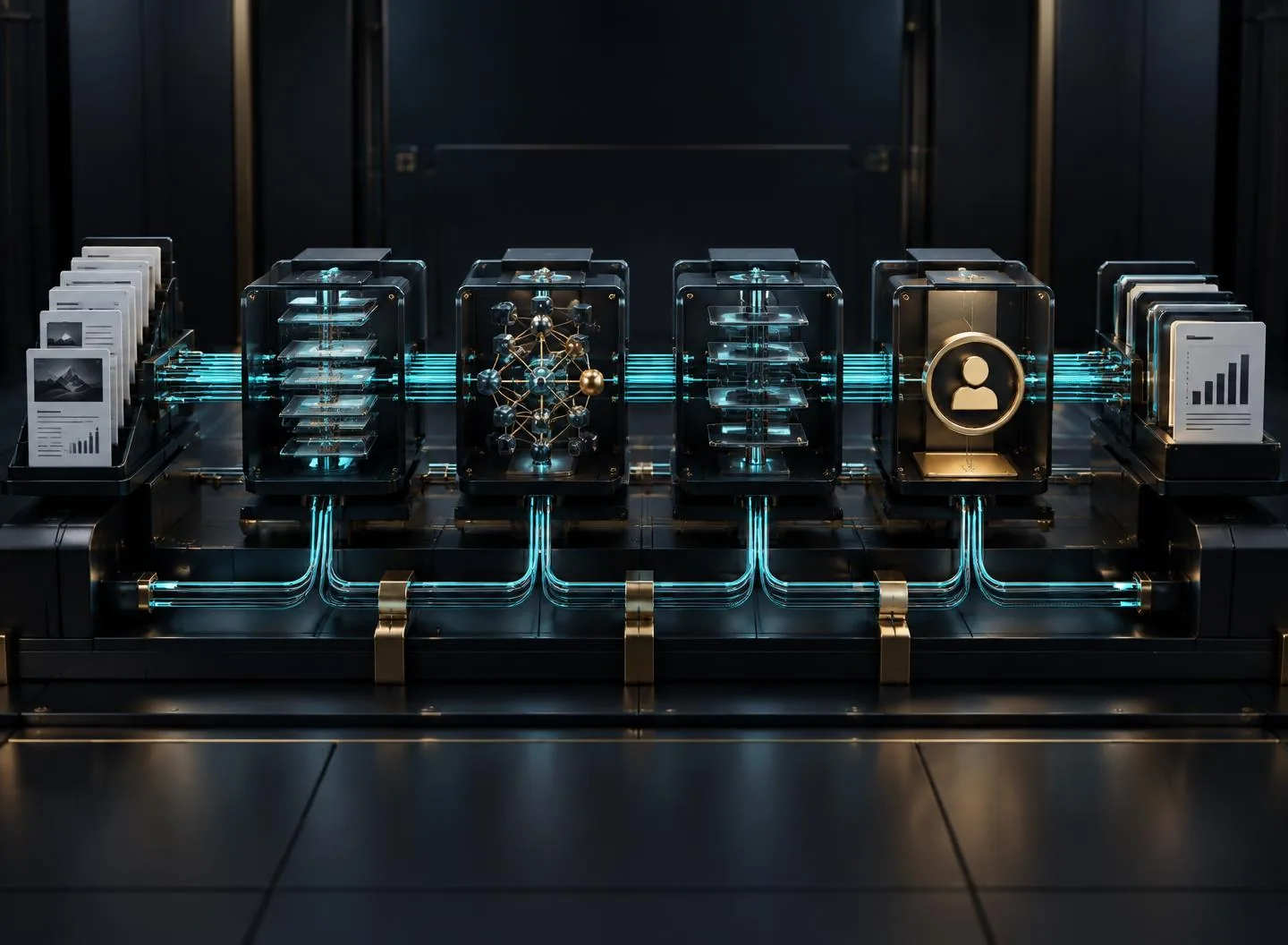
Technology / Automation / AI & agentic systems
We design, build, deploy and support useful business systems — from websites and internal tools to connected workflows and custom AI agents, with people in control.
The principle
An agent can organise a lead, search approved knowledge or draft a document. An automation can route a request and update a system. A person still decides when the stakes call for judgment. We make those boundaries visible from the start.
Validated input
Grounded agent
Human approval
System output
Illustrative workflow · human approval before action
Map the work
Build & connect
Review & improve
Full-stack delivery
Map the real work, select valuable use cases, define architecture, evaluation, permissions and running costs before building.
Handover: Workflow map, prioritised use cases and a scoped specification.
Discuss this capabilityTask-specific research, knowledge, document and lead-support agents can use tools, follow orchestrated steps and produce structured outputs. Validation and human approval stay in the loop for consequential decisions.
Handover: Configured agent, tool boundaries, evaluation cases and human-review rules.
Discuss this capabilityConnect approved business documents and SOPs to source-aware answers, with isolated context and access permissions suited to the team.

Handover: A controlled knowledge source, retrieval flow and answer-review process.
Discuss this capabilityIntake, qualification, CRM assignment, reminders, approval pipelines, document generation, data sync and reporting can work as one traceable flow.
Handover: Configured integrations, exception paths and ownership of each handoff.
Discuss this capabilityDesign and build dashboards, portals, forms, team operations applications and web apps around the decisions people actually need to make.
Handover: Tested interface, deployed tool and usable documentation.
Discuss this capabilityConnect APIs, CRM, Google Workspace and data systems using suitable orchestration tools, including n8n when it fits; no tool is prescribed before discovery.

Handover: Integration map, permissions and monitoring plan.
Discuss this capabilityContent architecture, UI/UX, responsive build, CMS and lead capture create a customer-facing layer connected to the systems behind it.
Handover: Designed platform, tested customer journey and scoped hosting/support handoff.
Discuss this capabilityTest in context, roll out with permissions and owners, train the team, monitor failures and costs, and agree ongoing support where useful.
Handover: Test evidence, runbook, owner roles, team training and scoped maintenance.
Discuss this capabilityWorkflow explorer / illustrative examples
These are deterministic examples, not a live agent or customer system. Each engagement is designed around actual tools, permissions and decisions.
Example workflow / 01
Lead form and validated details
Qualification assistant organises context
CRM assigns the right owner
Person reviews and follows up
Next action and reporting trail
What gets handed over
The exact artifacts depend on scope. Third-party tools, APIs and hosting may have separate usage costs defined in the proposal.
Workflow map & specification
Configured systems, agents and integrations
Test evidence & approval rules
Runbook, access and owner roles
Team training & scoped ongoing support
An operating model
Source-grounded assistance, client-specific context, structured outputs and human approval are designed into the workflow. Logs, bounded retries, cost controls and exception paths make the system inspectable when something needs attention.
Approved sources and validated requests
Task-specific assistance with checks
Review before consequential action
Monitoring, documentation and ownership
FAQ
Start with one workflow
Also at Reach Us Solutions